What Is Financial Literacy? A Simple Guide to Understanding Money Better
Ever stared at your bank account and thought, “Where did all my money go?”
You’re not alone—and that’s exactly why financial literacy matters.
So, What Is Financial Literacy Really?
Financial literacy is just a fancy way of saying: Do you know how to manage your money?
It means understanding the basics like:
- How to save money
- How to budget
- How to avoid debt
- How to plan for the future
It’s about being in control of your money—not letting it control you. And no, you don’t need to be a finance expert to get started.
Why Is Financial Literacy So Important?
Let’s be real: most of us didn’t learn about money in school.
We were taught algebra and history, but not how to build a budget or save for emergencies.
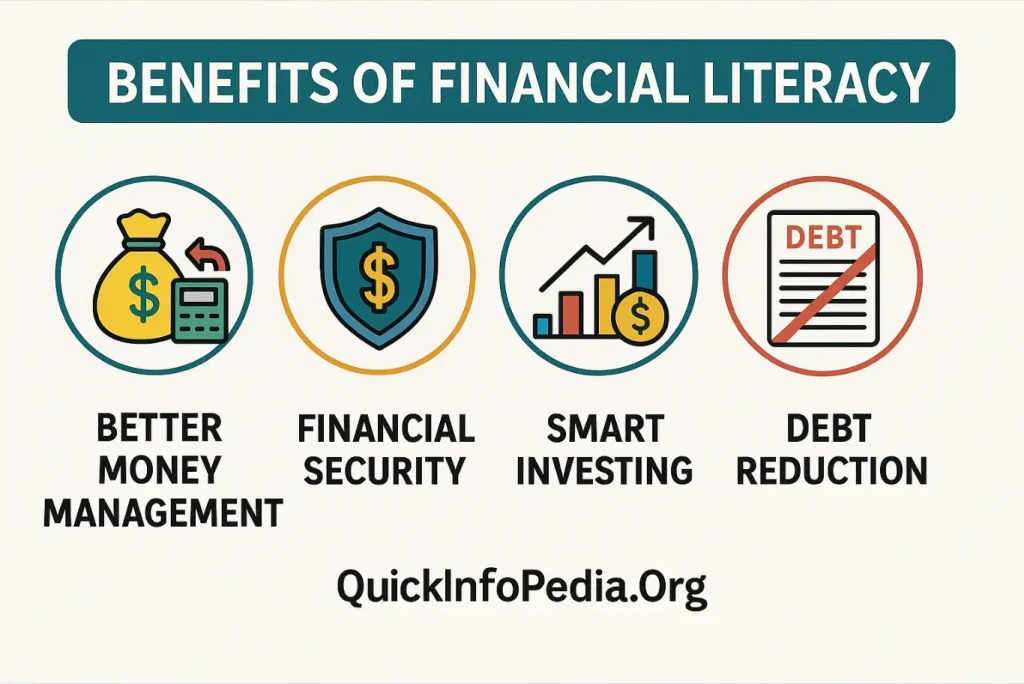
That’s why financial literacy is important—because it helps you:
- Avoid debt traps
- Feel more confident in financial decisions
- Save for what actually matters
- Plan for a stress-free future
It’s not about getting rich. It’s about being smart, aware, and ready for whatever life throws your way.
What Financial Literacy Looks Like in Real Life
Here’s the thing: financial literacy shows up in your everyday life.
It helps you:
- Decide whether that new phone is worth the cost
- Understand why interest rates matter
- Build a simple savings plan
- Track where your money actually goes
Without it? You’re just guessing—and that can lead to some costly mistakes.
Common Money Mistakes (That We All Make)
Nobody’s perfect with money—and that’s okay. But the good news is, most mistakes are fixable.
Some common slip-ups:
- Treating credit like cash
- Not saving at all
- Ignoring monthly spending habits
- Waiting too long to invest
Learning financial basics can help you avoid these traps and recover faster if you do fall into them.
How to Get Better with Money: A Step-by-Step Start
Want to become more financially literate? Start small and build up. Here’s how:
| Step | What to Do |
|---|---|
| 1 | Learn the basics—budgeting, saving, and borrowing |
| 2 | Make a simple monthly budget (pen & paper works!) |
| 3 | Track your spending—see where your money actually goes |
| 4 | Set small goals like saving $5 a day |
| 5 | Read or watch something about money each week |
| 6 | Talk about money with someone you trust |
Financial literacy isn’t one big lesson—it’s lots of small, daily habits.
It’s for Everyone: Students, Adults, Families
Financial literacy isn’t just for grown-ups with big jobs.
- Students need it to handle loans and budgets.
- Young adults use it to build credit and avoid mistakes.
- Parents use it to plan for the family’s future.
- And everyone needs it to feel safe and secure with their money.
The more we learn, the better we do—and the more confident we feel.
Final Thoughts: Take Control, One Step at a Time
Managing money doesn’t have to be scary.
It just takes a little learning, some trial and error, and a willingness to grow.
Financial literacy is about freedom—freedom to make smart choices, to sleep better at night, and to know your future is in your hands.