How to Choose Foundation Shade: A Simple Guide to Finding Your Match
Have you ever looked in the mirror and thought, “Why doesn’t my foundation match my neck?” You’re not alone. Finding the right foundation shade can be tricky—but it doesn’t have to be.
With just a few easy steps and the right tools, you can find a shade that makes your skin look natural, fresh, and glowing. Let’s walk through it together.
Why Choosing the Right Shade Feels So Hard?
It’s easy to get confused. The lighting in stores is rarely helpful, every brand uses different names, and if you pick the wrong undertone, your foundation can look dull, orange, or washed out.
Many people:
- Test in bad lighting
- Skip checking their undertone
- Don’t wait to see how the product settles on their skin
But once you understand your skin tone, undertone, and a few helpful tips, choosing the right foundation becomes simple.
Step 1: Know Your Skin Tone and Undertone
Your skin tone is the surface color of your skin—like fair, medium, or deep. Your undertone is the subtle hue underneath—cool, warm, or neutral.
How to find your undertone:
- Cool undertone: Veins look blue or purple, and silver jewelry suits you.
- Warm undertone: Veins look green, and gold jewelry looks best.
- Neutral undertone: You see both blue and green, and both gold and silver work for you.
Knowing this helps you choose a foundation that blends beautifully with your skin—not just sits on top.
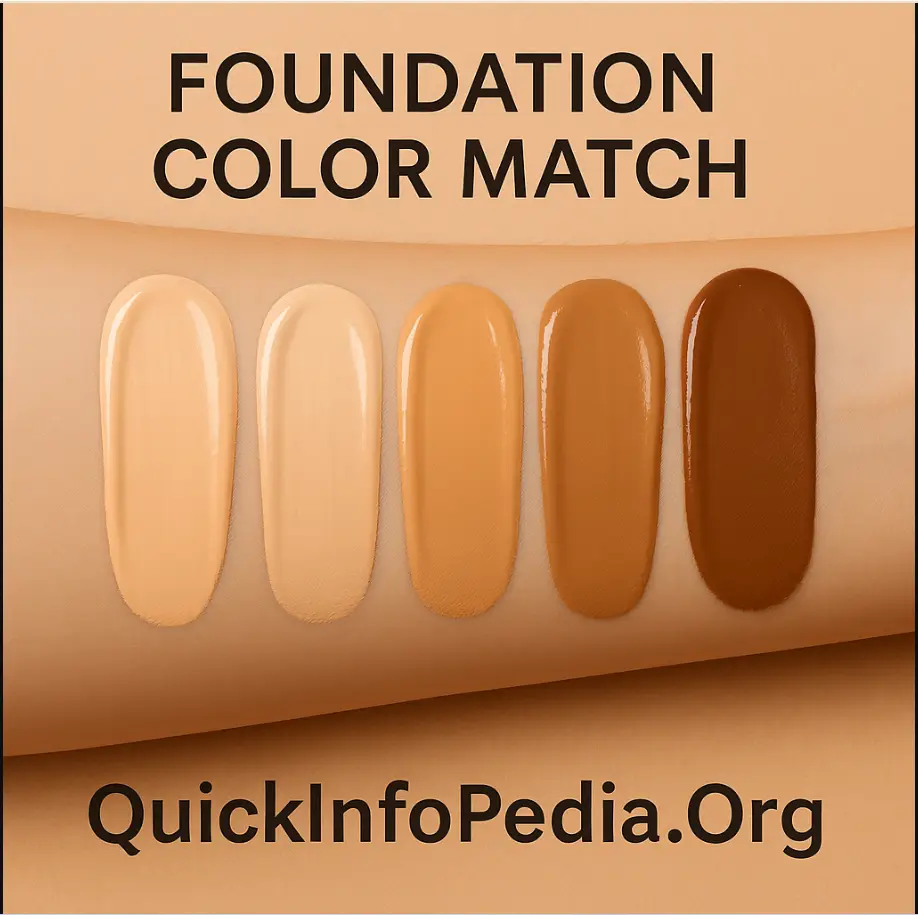
Step 2: Use a Shade Finder or Chart
Not sure what shade to choose? Use an online foundation shade finder. These tools ask about your skin tone, undertone, and even let you upload a photo to match shades from popular brands.
Brands like Sephora, MAC, and Fenty have great tools and shade charts that take out all the guesswork.
Step 3: Always Test in Natural Light
This step is so important. Apply a small amount of foundation on your jawline or chest and check it in natural light—not under store lights or your bathroom mirror.
Natural daylight shows the real color and how it blends with your neck and chest. The goal is to make your makeup look seamless, not patchy or mismatched.
Step 4: Match Your Skin Type Too
Even the perfect shade won’t work if the formula doesn’t suit your skin type.
- Oily skin? Go for matte or oil-control formulas.
- Dry skin? Choose hydrating or dewy foundations.
- Some foundations also oxidize (darken after a few minutes), so always wait 10–15 minutes to see the final color.
Step 5: When You’re Not Sure, Go Warmer
If you’re between two shades, it’s usually safer to go for the slightly warmer one. It blends better with your natural warmth and can be balanced with a setting powder or bronzer.
A shade that’s too light can make you look pale or chalky, especially in photos.
Common Questions About Foundation Shades
How do I find my shade without going to a store?
Use online tools and read reviews from people with similar skin tones. A good photo in natural light helps a lot too.
Do I match my foundation to my face or neck?
Try to match it to both. Test on your jawline and blend toward your neck and chest for the most natural look.
What if I already bought the wrong shade?
No worries—mix it with a lighter or darker foundation, or adjust using concealer or bronzer.
Do I need a different shade in summer and winter?
Yes! Many people tan in summer and lighten in winter. Keep two shades handy to mix as needed.
Final Words: Let Your Skin Shine Through
Choosing your foundation shade doesn’t have to be stressful. Once you know your undertone, test in daylight, and pick a formula that works for your skin type, you’ll feel confident every time you apply your makeup.